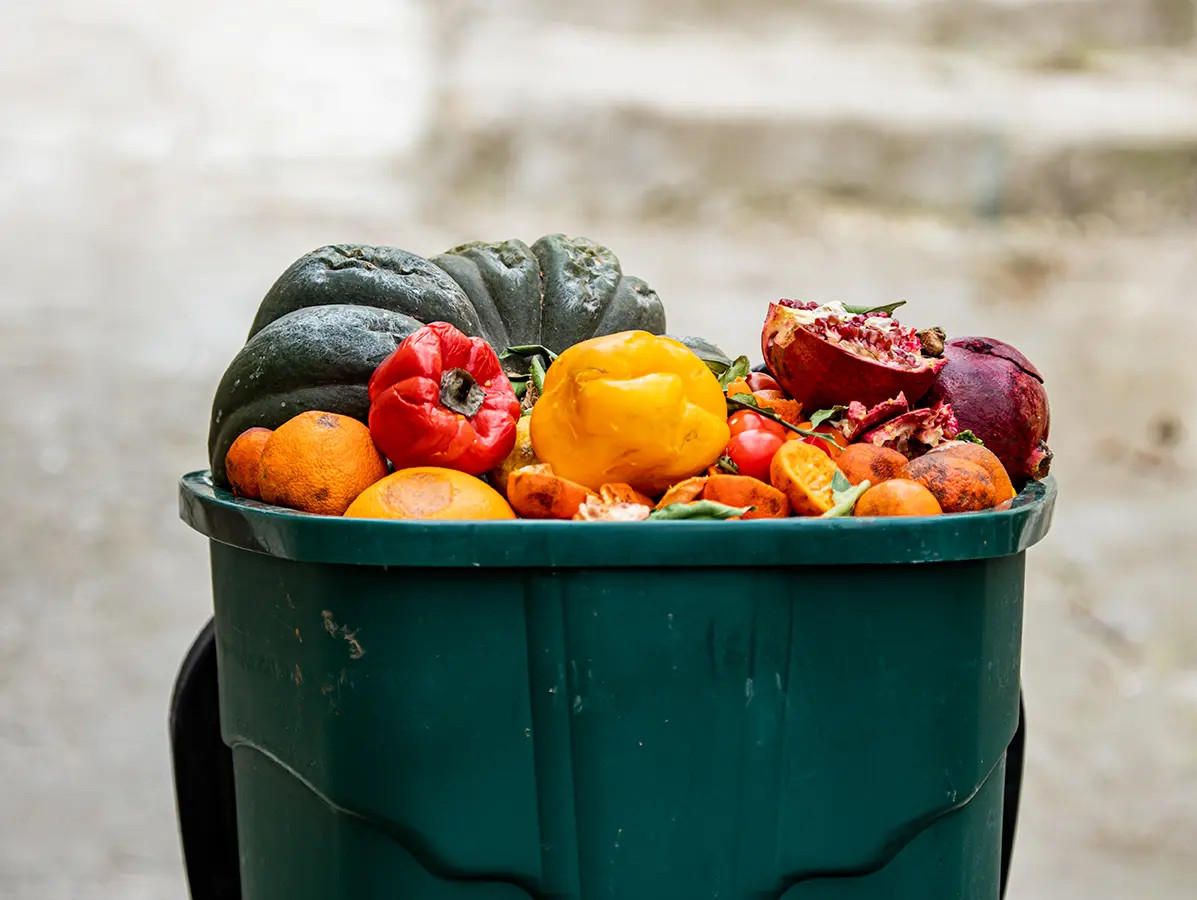
Food waste. We all know it’s a problem, yet the scale remains staggering. Every year, more than a billion tonnes of food are lost worldwide — accounting for 8 to 10 percent of total CO₂ emissions. That’s why ten countries have joined forces in the Food Pact Network, led by the UK-based organisation WRAP. The Netherlands is part of this effort — and stands out among the participants.
The Netherlands is represented by Samen Tegen Voedselverspilling (Food Waste Free United). The organisation brings together more than 230 stakeholders, from farmers and producers to retailers, the hospitality sector, research institutes and government bodies. Their shared goal: to halve food waste in the Netherlands by 2030.
According to the Food Pact Network Impact Report 2025, progress is already clear. Nationally, food waste dropped by 17 percent between 2015 and 2023. In the retail sector, the reduction reached 33 percent between 2018 and 2024. And from 2020 to 2023, more than 103,000 tonnes of food were redistributed to food banks.
What works in the Netherlands doesn’t stay in the Netherlands. Samen Tegen Voedselverspilling has shared its bread waste reduction strategies with Mexico and collaborated with Indonesia on hospitality-sector solutions. Countries within the network apply the same approach: measure, set targets and take action. This makes results comparable — and knowledge transferable.
The Food Pact Network includes ten members: Australia, Brazil, Indonesia, Mexico, the Netherlands, New Zealand, South Africa, the United Kingdom and two initiatives in the United States. Together they represent 14 percent of the global population, 38 percent of global GDP and around 20 percent of all food waste. More than 900 organisations are already involved.
According to WRAP, this collective effort has prevented 220,000 tonnes of food waste, redistributed 2.7 million tonnes of food and saved 680,000 tonnes of CO₂ emissions worldwide.
“If we leverage our learnings across countries, we can truly replicate, scale, and accelerate progress,” says Sanne Stroosnider of Wageningen University & Research, Samen Tegen Voedselverspilling.
The message is clear: the knowledge is there — now it’s time to scale it up and make a real difference.
Read the report: ‘Transforming the food system together’
Samentegenvoedselverspilling.nl
Source: Samen Tegen Voedselverspilling
Magazine Voedingsindustrie has been made possible in part by:



© COPYRIGHT 2026 VOEDINGSINDUSTRIE | ALLE RECHTEN VOORBEHOUDEN
Powered by Wallbrink Crossmedia © 2026